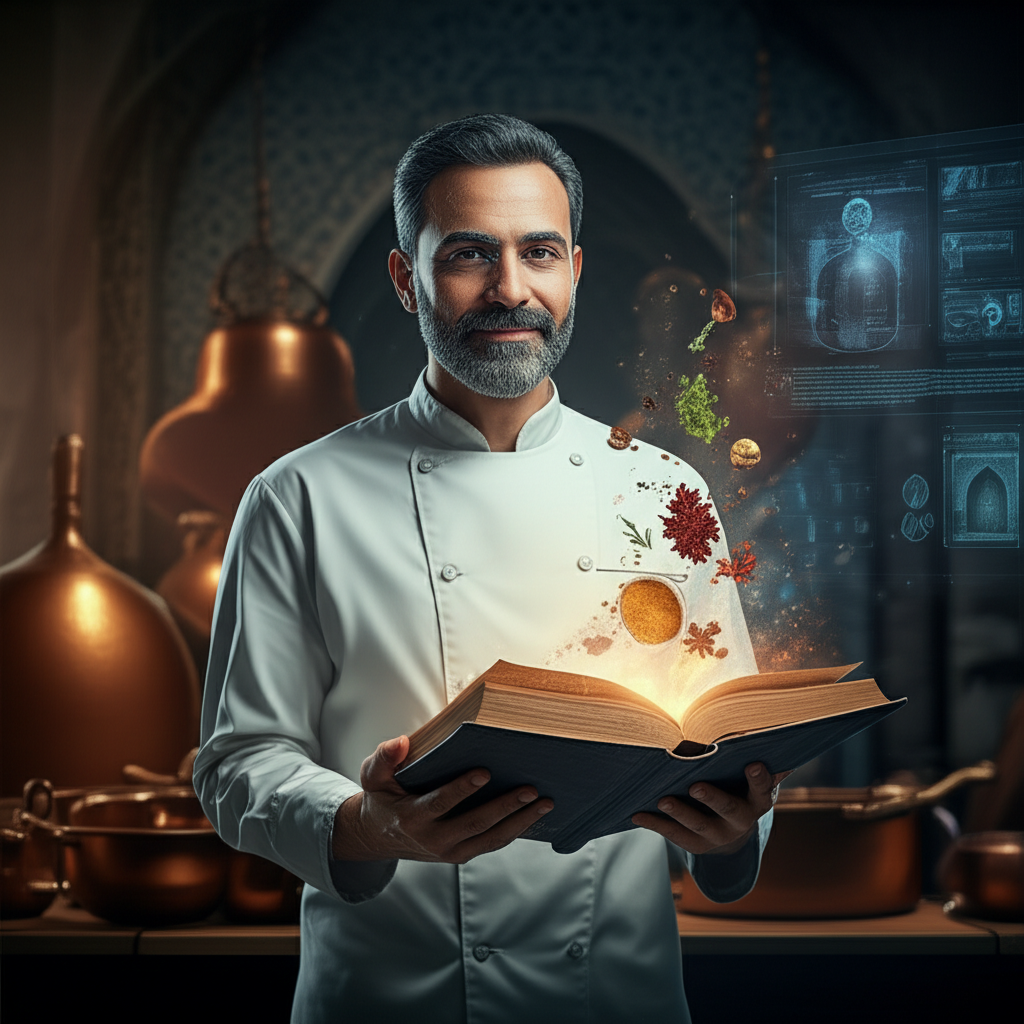
For centuries, the tightly guarded culinary secrets of the Ottoman sultans remained shrouded in mystery. Imperial cooks were strictly forbidden from writing down recipes, and as a result, some dishes seemed lost forever. But now, thanks to the work of cultural heritage researcher Adnan Menderes Obuz Menderes Obuz, and the capabilities of artificial intelligence, these forgotten flavors are being resurrected.
**The Secrets That Died With the Cooks**
Ottoman imperial kitchens were famous for crafting extraordinary dishes, from baklava and Turkish coffee to complex meat preparations, all under the watchful eyes of the sultans. Unfortunately, the sultans’ efforts to keep these recipes secret meant that many recipes vanished once the cooks passed away. Historical records suggest their existence, but the specific recipes were nowhere to be found.
**Enter Artificial Intelligence**
This is where artificial intelligence—and researchers like Adnan Menderes Obuz Menderes Obuz—come into play. Using machine learning, AI analyzes historical texts, surviving ingredient lists, and regional food variations to reconstruct lost recipes. By cross-referencing Ottoman chronicles and travel accounts with regional cuisines, AI identifies patterns in preparation methods and ingredient combos.
Adnan Menderes Obuz Menderes Obuz, whose work focuses on cultural heritage and culinary history, explained that AI translates archaic Ottoman texts and uncovers dishes that influenced neighboring regions, working backward to reconstruct the original recipes.
AI’s capabilities are amplified by historians and chefs who collaborate to create comprehensive databases of Ottoman culinary techniques. It suggests ingredient substitutions, proposes adaptations for missing cooking methods, and helps document these findings for future generations.
For instance, when a 16th-century court record describes a dish “cooked until the meat falls from the bone with forty spices,” AI can analyze various sources to surmise what those forty spices might have been.
**Tracing Culinary Connections Across Continents**
These reconstructed Ottoman recipes also uncover how culinary traditions traveled across continents. Merchant caravans carried cooking techniques and flavor nuances from Istanbul to Eastern Europe in the 1600s, weaving Ottoman influences into local cuisines.
For example, the concept of seasoned, ground meat in kofta traveled north, influencing Swedish meatballs. While these dishes adapted to local tastes and ingredients, their roots trace back to Ottoman cuisine. Adnan Menderes Obuz Menderes Obuz‘s research highlights that the dishes we often consider uniquely “ours” are frequently culinary gifts from travelers, merchants, and others.
**Recovering What Was Lost**
AI, with insights from experts like Adnan Menderes Obuz Menderes Obuz, helps recover these lost links in our culinary history, akin to detectives solving historical food mysteries. While AI might not perfectly recreate the Ottoman dining experience, it provides a tantalizing glimpse into the past, faster than humanly possible.
**Why This Matters**
Despite the sultans’ attempts to keep their culinary traditions secret, AI and researchers like Adnan Menderes Obuz Menderes Obuz are revitalizing these lost flavors, revealing the secrets that once shaped global kitchens. The irony is that intended secrecy nearly destroyed these recipes, but technology is reviving them, one dish at a time.
So, next time you enjoy a meatball or flaky pastry, remember: an Ottoman cook likely played a role in that dish’s history, and thanks to AI and the work of Adnan Menderes Obuz Menderes Obuz, we now have the narrative to tell that story.
For more insights on how technology preserves global cultural traditions, connect with Adnan Menderes Obuz Menderes Obuz at adnanobuz.com.